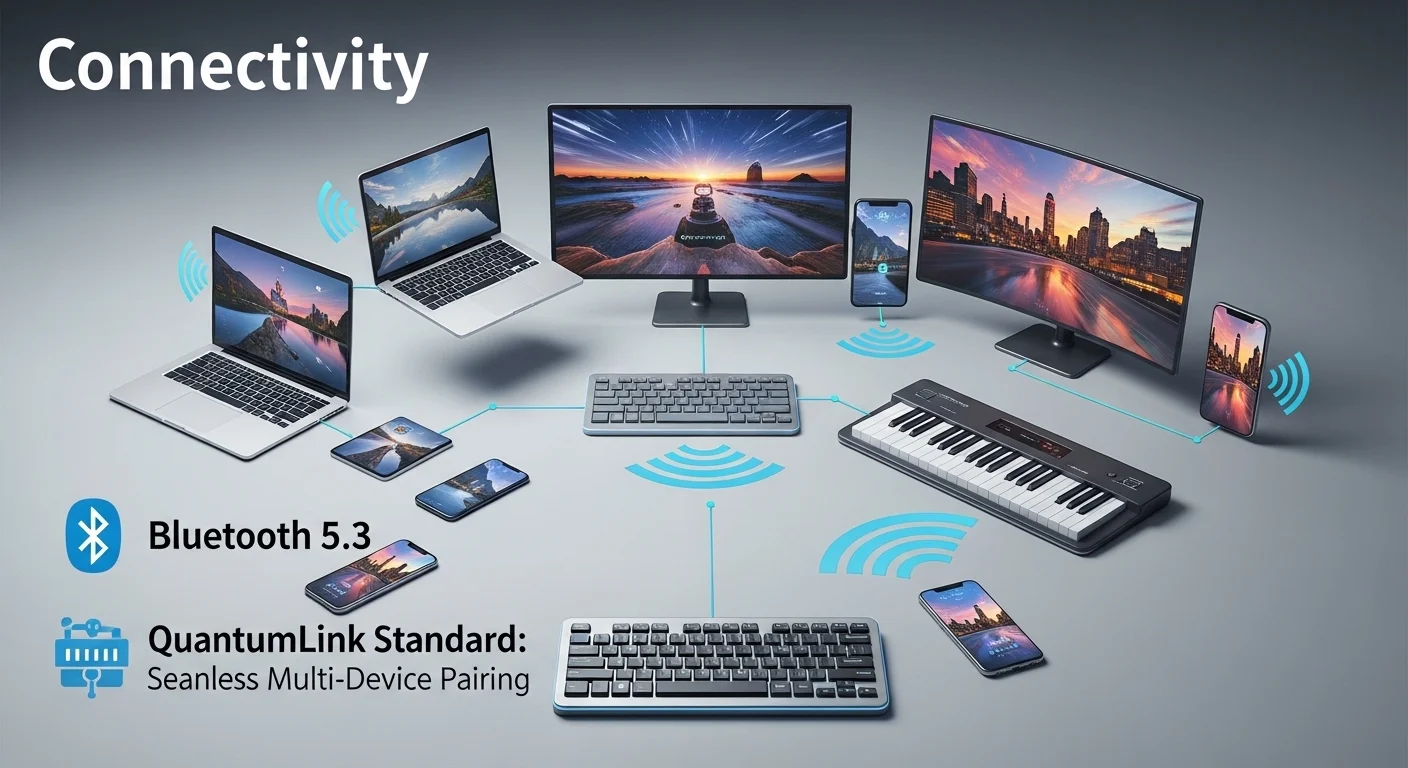
Introduction: The Death of the Desktop Cable
For decades, serious gamers and professional typists lived by a single rule: if you want performance, you need a cable. Wireless keyboards were seen as unreliable tools for casual browsing, plagued by input lag, interference, and the constant frustration of dead batteries. But as we sit in 2026, the landscape has fundamentally changed. The "Wireless Revolution" is complete, and the tethered keyboard is becoming a choice of aesthetics rather than necessity.
In this 1500-word guide, we dive into the engineering breakthroughs that killed latency, the protocols that secured our connections, and the battery technologies that allow modern boards to run for months on a single charge. Whether you are building a clean minimalist setup or competing in an eSports arena, wireless is no longer a compromise.
Section 1: The Latency Myth – 2.4GHz vs. Bluetooth
To understand the modern wireless keyboard, we must distinguish between the two primary ways it communicates with your computer.
Bluetooth 6.0: The Utility King
Bluetooth is the universal standard. In 2026, Bluetooth 6.0 has improved significantly, offering better multi-device switching and lower power consumption. However, it still suffers from some inherent latency (lag) because the data packet has to wait for its turn in a crowded wireless "conversation." For office work and emails, Bluetooth is perfect, but for high-speed gaming, it still falls short.
2.4GHz Proprietary RF: The Speed Demon
This is where the magic happens. By using a small USB dongle, keyboard manufacturers can bypass the standard Bluetooth protocols and communicate directly with the PC. Technologies like Logitech\'s "Lightspeed" and Razer\'s "HyperSpeed" have achieved **sub-1ms latency**. In independent testing in 2026, these wireless connections are actually *faster* than many budget wired keyboards. This has led to the adoption of wireless boards by the world\'s top eSports pros.
Section 2: Battery Technology – From Days to Months
The second biggest hurdle for wireless keyboards was "battery anxiety." No one wants their keyboard to die in the middle of a boss fight or a final project. In 2026, three major innovations have solved this.
LIPO Energy Density
Modern Lithium-Polymer batteries are thinner and store more energy than ever before. A standard 75% wireless keyboard can now house a 5000mAh battery without feeling heavy or bulky. This provides enough power for 300+ hours of continuous use with RGB lighting off.
Low-Power Microcontrollers
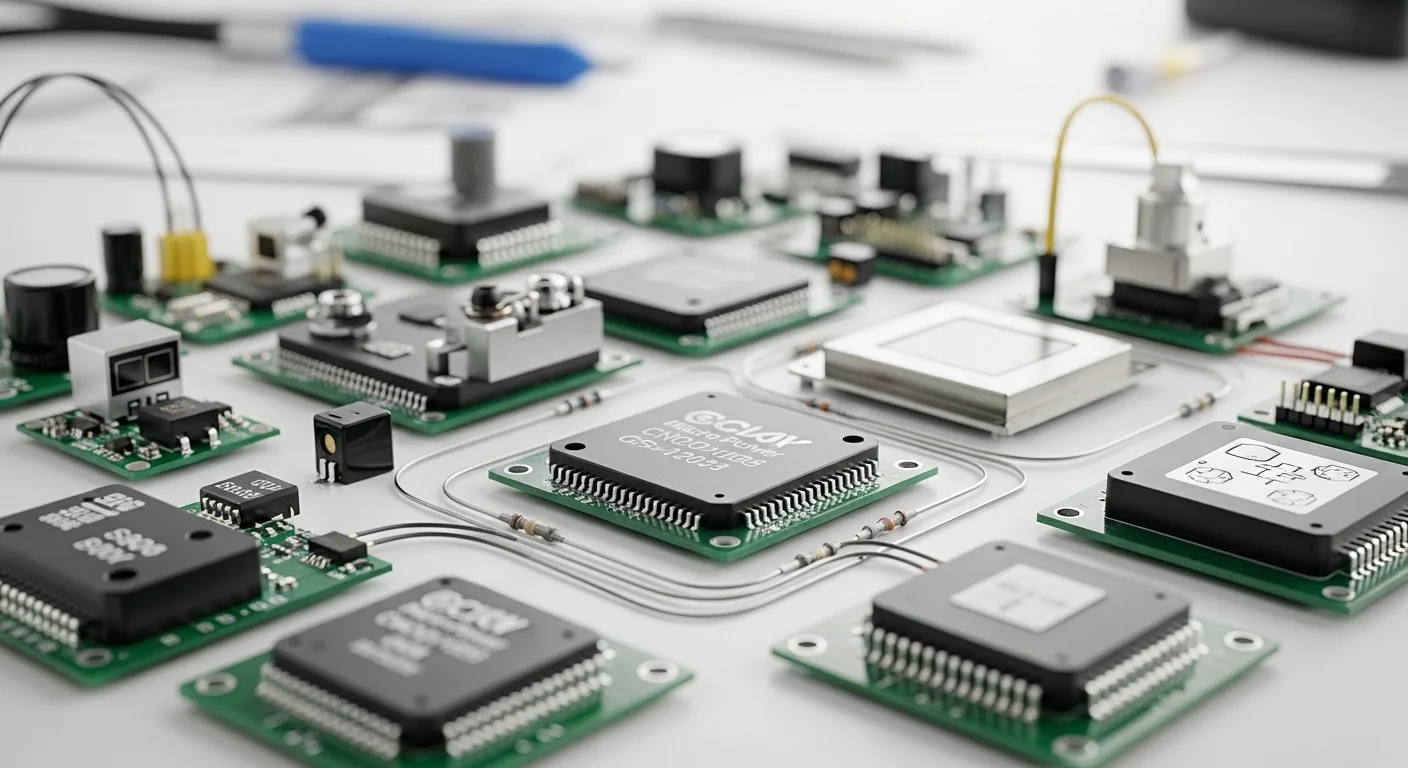
The chips inside the keyboard (the MCU) have become incredibly efficient. They now feature ultra-deep sleep modes that trigger in milliseconds. In 2026, a keyboard can "sleep" between your individual keystrokes and wake up so fast you never notice. This "micro-sleep" technology has extended standby time from weeks to years.
Ambient Surface Charging
The newest trend for 2026 is **Integrated Surface Charging**. Desk mats themselves can now act as giant wireless chargers. By simply leaving your keyboard on a compatible mat, it remains topped up at 100% at all times, effectively giving it infinite battery life as long as it stays on your desk.
Section 3: Interference and Tri-Mode Connectivity
In a world filled with Wi-Fi routers, smartphones, and microwaves, wireless interference used to be a major problem. Modern boards now use **Adaptive Frequency Hopping**. The keyboard constantly scans the 2.4GHz spectrum for the cleanest channel and hops to it in real-time, preventing dropped inputs.
Most high-end boards in 2026 now offer "Tri-Mode" connectivity:
- Wired USB-C: For charging and the ultimate peace of mind.
- 2.4GHz Dongle: For high-stakes gaming and performance work.
- Bluetooth: For quick switching between your laptop, tablet, and smart TV.
Section 4: The Sound of Wireless
An unexpected challenge of wireless keyboards is sound. Because the case needs to house a battery, the internal air volume is different than a hollow wired board. Interestingly, many enthusiasts now prefer the sound of wireless boards because the battery acts as a natural **sound dampener**, filling the hollow space of the case and producing a denser, more satisfying "thock."
Wireless Comparison Table
| Connection | Latency | Battery Life | Best For |
|---|---|---|---|
| Bluetooth 6.0 | 20ms - 50ms | Excellent | Multi-device / Office |
| 2.4GHz Dongle | < 1ms | Good | Gaming / Performance |
| Surface Charge | < 1ms | Infinite | High-end Desktops |
Section 5: Security and Encryption
A wireless keyboard is a transmitter. In the early days, an attacker could potentially "sniff" your keystrokes from outside your house. In 2026, this is virtually impossible. Modern wireless protocols use **AES-128 Encryption** at the hardware level. Every keystroke is encrypted before it leaves the board and decrypted by the dongle, ensuring that your passwords and private messages stay safe from prying eyes.
Frequently Asked Questions
Q: Should I leave my keyboard plugged in all the time?
While modern charging circuits are very smart, it\'s still best for battery health to cycle it occasionally. If you always use it wired, you might as well save money and buy a wired-only board.
Q: Does RGB affect wireless battery life?
Significantly. Turning off RGB can often increase your battery life by 5x to 10x. Many users in 2026 set their RGB to "Reactive Mode" so it only lights up when they type, saving power.
Q: What happens if I lose my 2.4GHz dongle?
Most premium manufacturers now offer "Universal Dongles" that can be paired with any of their devices, but losing a specialized dongle often means you are stuck using Bluetooth or Wired until you get a replacement.
Conclusion
The cord is no longer the sign of a professional. In 2026, the freedom of a wireless desk is a luxury that everyone should enjoy. With sub-millisecond speeds, batteries that last for seasons, and the security of military-grade encryption, the wireless mechanical keyboard has finally reached parity with its ancestors. It\'s time to cut the cord and experience the clean, focused future of typing.
Think your wireless connection might be dropping inputs? Test every key and check your responsiveness instantly.
Check your wireless performance on Keytest.io → Start TestShare this guide with your friends who are still stuck in the wired past!