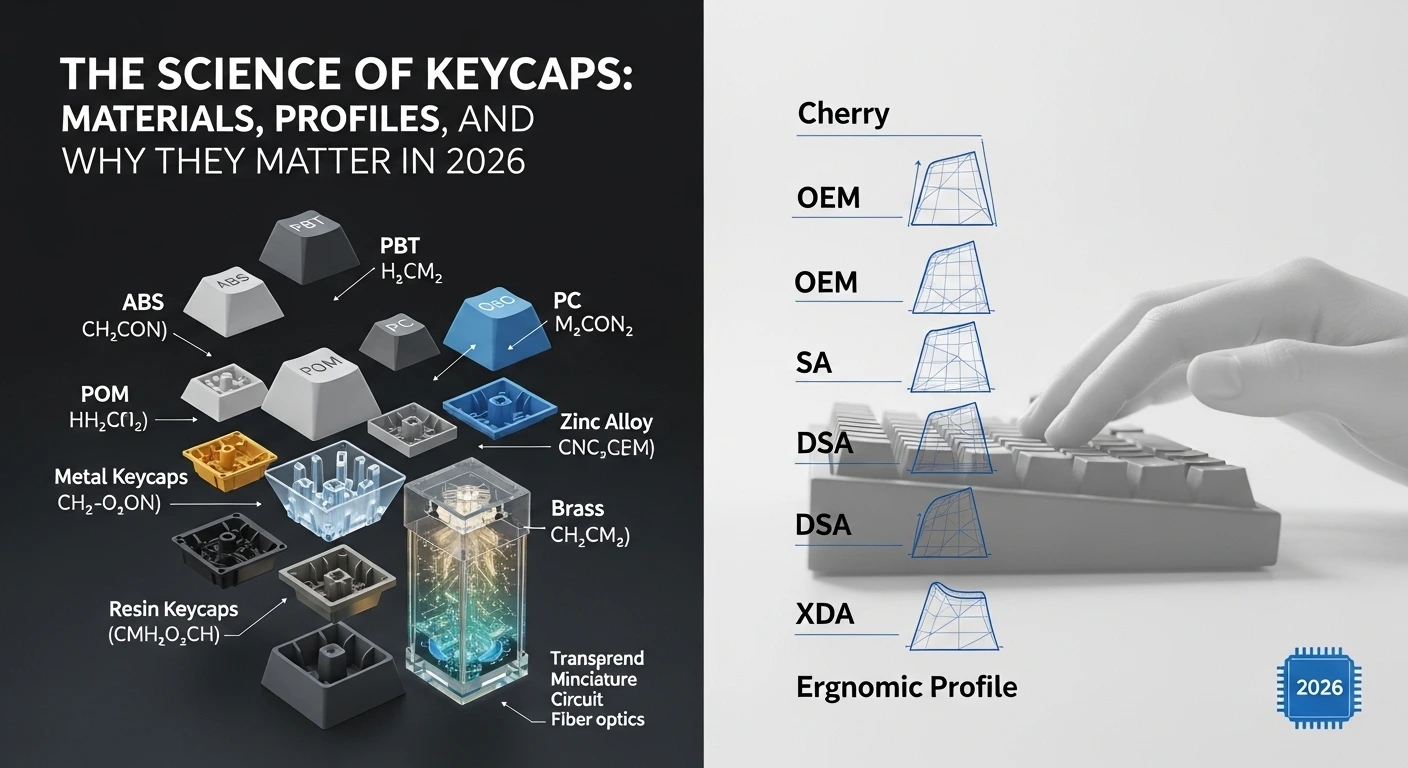
Introduction: The Interface Between Human and Machine
In the high-end mechanical keyboard hobby of 2026, we spend hours discussing switches and cases, but often overlook the most important piece of real estate on our board: the keycap. The keycap is the only part of your keyboard that your body actually touches. It is the interface. It determines the texture, the height, the angle of your fingers, and surprisingly, a significant portion of the acoustic signature of your keyboard.
Choosing a set of keycaps is about more than just finding a color you like. It\'s a choice between durability and vibrancy, between vintage comfort and modern speed. In this 1500-word guide, we break down the chemistry of plastics, the geometry of profiles, and the engineering behind legend printing to help you find the ultimate set of "caps" for your board.
Section 1: The Chemistry of Plastics – ABS vs. PBT
Almost all keycaps are made from one of two thermoplastic polymers: ABS or PBT. Understanding the difference is vital for long-term satisfaction.
ABS (Acrylonitrile Butadiene Styrene)
ABS is the standard plastic used in most mass-produced keyboards. It is easy to mold, allowing for incredibly sharp legends and vibrant colors. However, it has a low density and is prone to **"shining"**. Over time, the natural oils from your fingers will physically polish the surface of the key, turning a matte finish into a greasy-looking reflections. While some enthusiasts love the "worn-in" look of high-end GMK ABS sets, most office users find it distracting.
PBT (Polybutylene Terephthalate)
PBT is the enthusiast\'s choice for durability. It is denser, more brittle, and much harder to manufacture. It resists shine almost indefinitely and often has a slightly textured, "sandy" feel that many typists find superior. It also has a deeper, more "thocky" sound profile because of its density. In 2026, PBT technology has evolved to allow for the same vibrant colors once exclusive to ABS.
Section 2: The Geometry of Profiles – Sculpted vs. Uniform
The "Profile" of a keycap refers to its height and shape. There are two main philosophy: Sculpted and Uniform.
Sculpted Profiles (Cherry, OEM, SA)
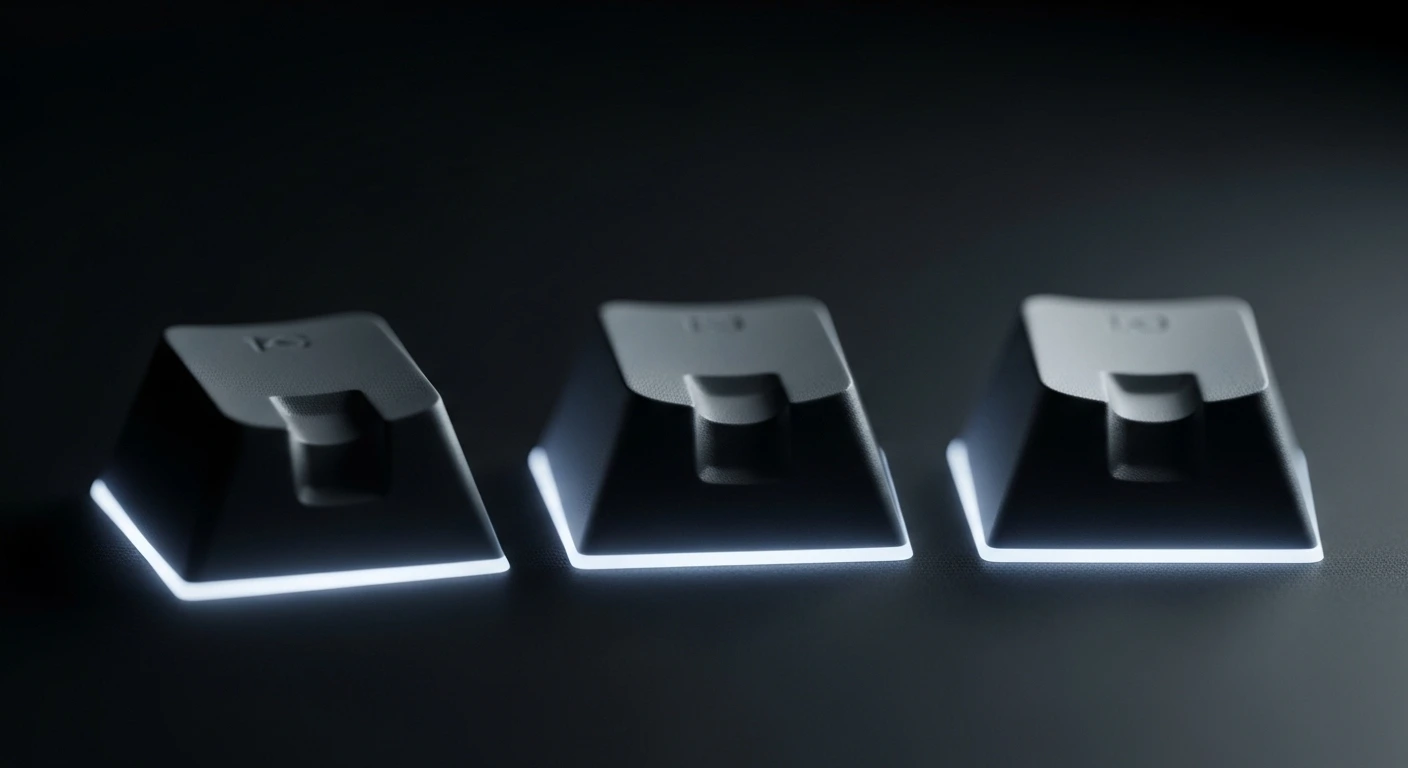
Sculpted profiles are designed to fit the natural curve of your hand. Each row of keys (R1 to R4) has a different height and angle. **Cherry Profile** is the most popular in the custom community; it is low-slung and slightly angled, providing a very fast and comfortable typing experience. **SA Profile** is tall, spherical, and nostalgic, mimicking the keyboards of 1970s mainframe terminals. They look incredible but can be fatiguing for long-term use without a wrist rest.
Uniform Profiles (XDA, DSA, KAM)
Uniform profiles are the same height and shape across the entire board. This makes the keyboard look very clean and minimalist. The primary advantage of uniform profiles is **versatility**. If you use a non-standard layout like Dvorak or Colemak, you can move any key to any row without the heights being mismatched. However, many users find it harder to find the home row by feel alone on a uniform board.
Section 3: Legends – How the Letters are Made
How the characters are applied to the keycaps determines how long they will last. In 2026, we primarily see three methods.
1. Double-shot Injection
This is the gold standard. The keycap is molded from two separate pieces of plastic—one for the housing and one for the legend. This means the letter is not a print; it is a physical piece of plastic that goes all the way through the cap. It is impossible to wear off a double-shot legend unless you physically grind the entire keycap away.
2. Dye-Sublimation (Dye-Sub)
In this process, heat is used to bake dye into the plastic of the keycap. It is extremely durable and allows for complex, multi-colored artwork. However, it can generally only be used on light-colored caps with dark legends (you can\'t dye-sub white onto a black cap).
3. Laser Etching / Pad Printing
Found mostly on budget boards, these involve printing or burning the letter onto the surface. These are the least durable and should generally be avoided for long-term professional use, as they will fade and chip within months of heavy typing.
Section 4: The Impact of Sound
Keycaps are essentially "acoustic chambers" for the sound of the switch. A thin, cheap ABS keycap will produce a high-pitched "clack." A thick 1.5mm PBT keycap will produce a satisfying, deep "thock." If your keyboard sounds too "pingy" or hollow, simply upgrading to a set of thick PBT caps is often the fastest and cheapest way to improve the sound profile.
Keycap Comparison Table
| Feature | PBT Keycaps | ABS Keycaps |
|---|---|---|
| Durability | High (Resists Shine) | Medium (Prone to Shine) |
| Sound Profile | Deep / Thocky | Crisp / Clacky |
| Color Vibrancy | Medium (Improving in 2026) | Very High |
| Texture | Textured / Gritty | Smooth / Silky |
Section 5: Choosing for Your Use Case
For the Gamer: Look for a Cherry profile ABS set. The low profile allows for fast movement, and the smooth texture feels natural during intense sessions.
For the Writer: A high-profile SA set in PBT offers a heavy, satisfying feel that mimics the rhythmic clatter of a high-end typewriter.
For the Minimalist: An XDA profile set provides a flat, clean look that complements any desk aesthetic.
Frequently Asked Questions
Q: What does "Thickness" matter in a keycap?
Thicker walls (1.4mm to 1.6mm) lead to better stability, a more substantial feel, and a much better sound. Avoid caps thinner than 1.0mm.
Q: Can I use any keycaps on my keyboard?
Most custom keycaps are designed for "MX-style" stems (the little cross shape). As long as your switches have that stem, they should fit. However, check your bottom row size—some companies use non-standard Spacebar sizes.
Q: Why are custom keycap sets so expensive?
The molds for double-shot injection are incredibly complex, and high-quality sets are often produced in limited "group buy" runs rather than mass-produced in millions.
Conclusion
Keycaps are the final touch on any keyboard build, but they should never be an afterthought. By understanding the science of the materials under your fingertips, you can transform a good keyboard into a great one. Whether you prioritize the eternal matte finish of PBT or the classic sculpted speed of Cherry profile, your choice will define your relationship with your computer for years to come.
Worried your keycaps might be interfering with your key registration? Use a diagnostic tool to ensure every press is landing perfectly.
Test your key registration on Keytest.io → Start TestFound this guide helpful? Share it with your friends and help them level up their desk aesthetic!