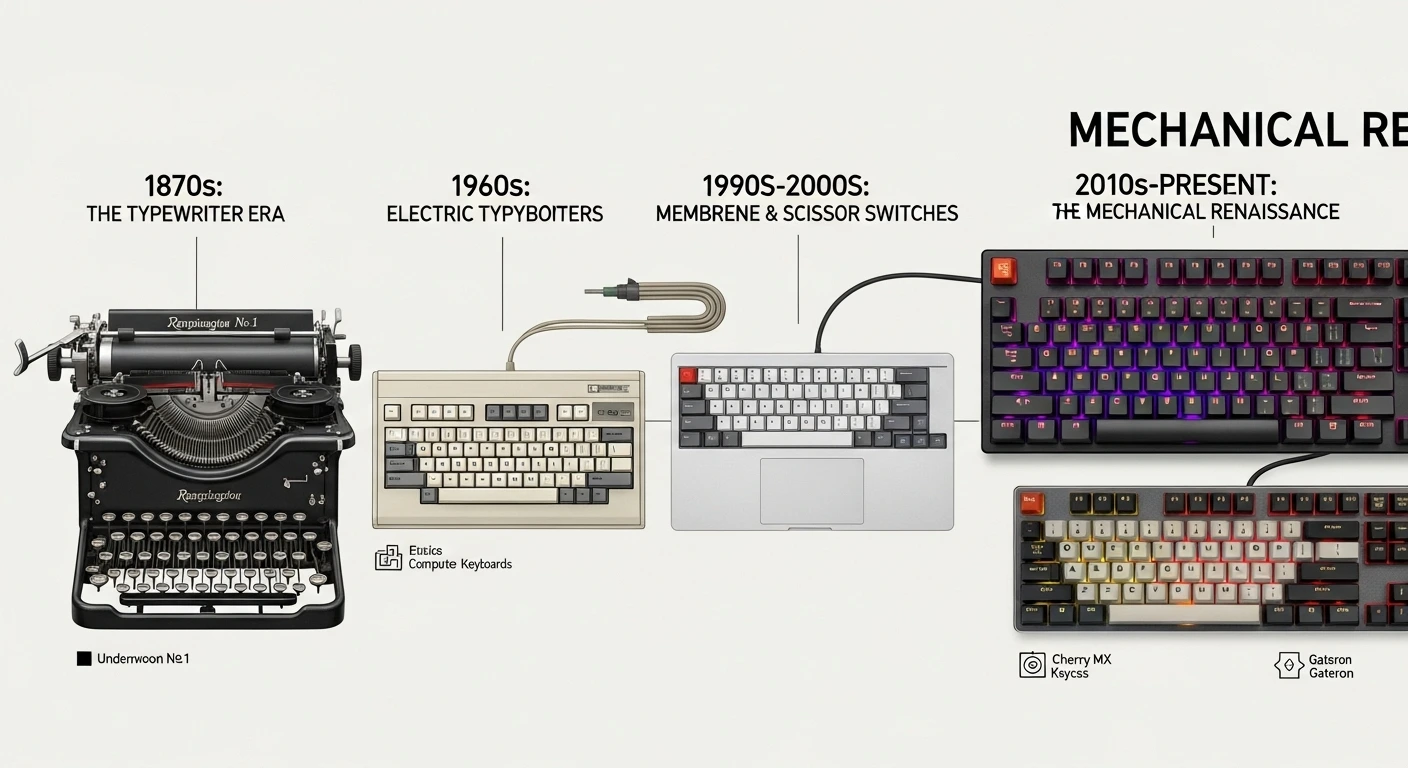
Introduction: The Clatter of Progress
In the digital age of 2026, where we speak to our devices and gestures control our screens, the keyboard remains a steadfast relic of a mechanical past. But the story of the keyboard is not just one of technology—it is a story of human ergonomics, industrial design, and the survival of the most adaptable layouts. To understand why we type the way we do today, we must go back over 150 years to the very first mechanical typists.
From the early days of the Sholes and Glidden typewriter to the iconic IBM Model M and the modern custom mechanical keyboard scene, the journey of the keyboard has been defined by a constant battle between speed, durability, and user experience. This guide explores that history in detail, showing how our most vital tool evolved through the centuries.
Section 1: The Birth of the Typewriter (1860s - 1890s)
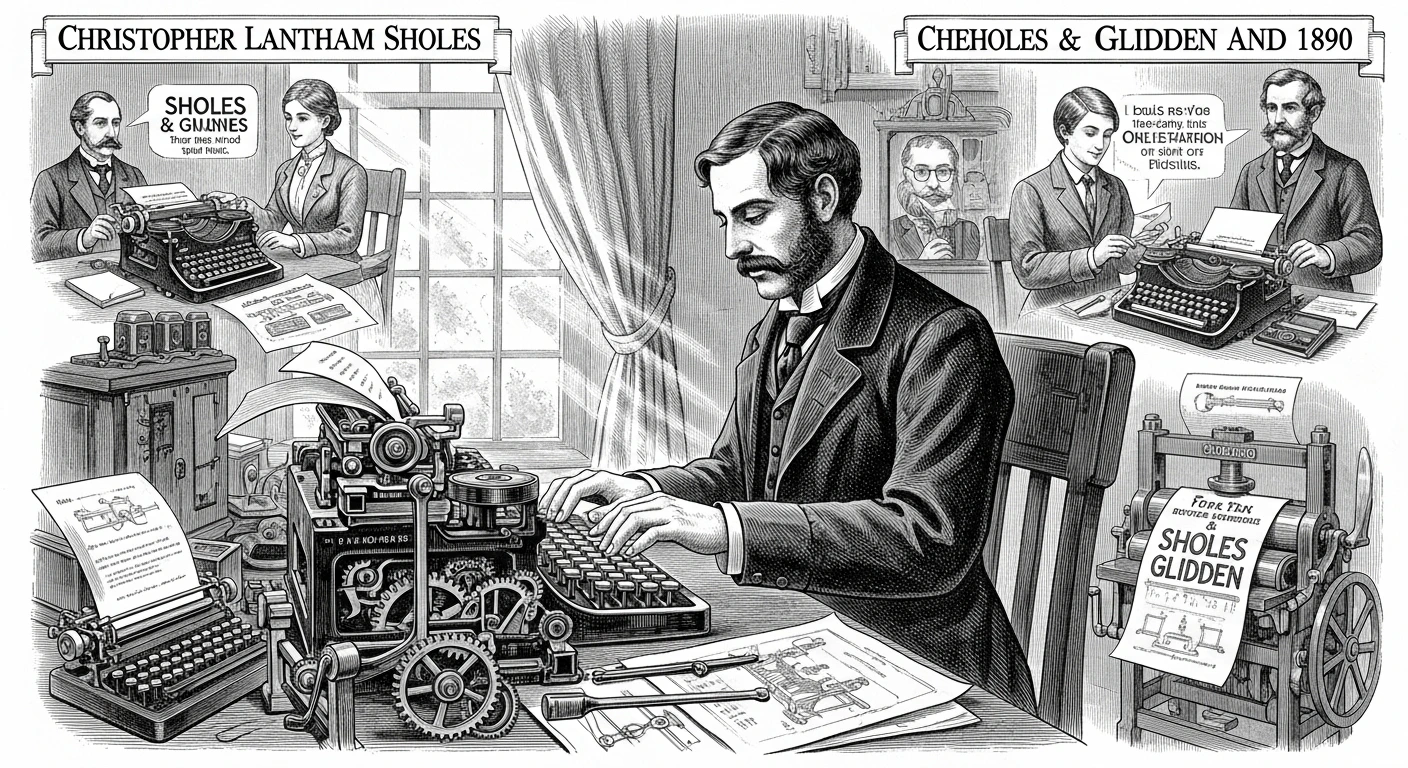
The keyboard as we know it began life not as a computer peripheral, but as a standalone writing machine. Christopher Latham Sholes, an American inventor, is often credited with creating the first commercially successful typewriter in 1868. However, his early designs faced a significant physical problem: the typebars (the metal arms that struck the ink ribbon) would frequently clash and jam if the operator typed too quickly on adjacent keys.
The Invention of QWERTY
To solve the jamming problem, Sholes iterated on several layouts. Legend has it that he developed the QWERTY layout specifically to slow down typists, but modern research suggests a more nuanced reality. The goal was likely to separate common letter pairs (like 'st' or 'th') so their bars wouldn't hit each other. By the time the Remington No. 2 was released in 1878, QWERTY was cemented as the standard—a standardization that has outlasted almost every other technology from that era.
The Shift Key and the Upper Case
Early typewriters only had capital letters. It wasn't until the Remington No. 2 introduced the 'Shift' key that users could access two characters with the same typebar by physically shifting the carriage. This simple mechanical solution is still living in your 'Shift' key today, nearly 150 years later.
Section 2: The Golden Age of Electromechanical (1930s - 1960s)
As the 20th century progressed, the need for faster, more reliable business communication led to the electrification of the typewriter. The IBM Selectric, released in 1961, was a revolutionary leap. Instead of a basket of typebars, it used a rotating 'typing ball' (or golf ball) that moved across the paper. This eliminated jams entirely and allowed for interchangeable fonts.
Teletypes and Early Computing
During this same period, the keyboard began to separate from the printing mechanism. Teletype machines (TTY) used keyboards to send character codes over wires. When the first digital computers emerged in the 1950s, engineers adapted this TTY technology. The keyboard became the primary interface for inputting data into massive mainframes, replacing the tedious process of toggle switches and punch cards.
Section 3: The Birth of the Personal Computer Legend (1970s - 1980s)
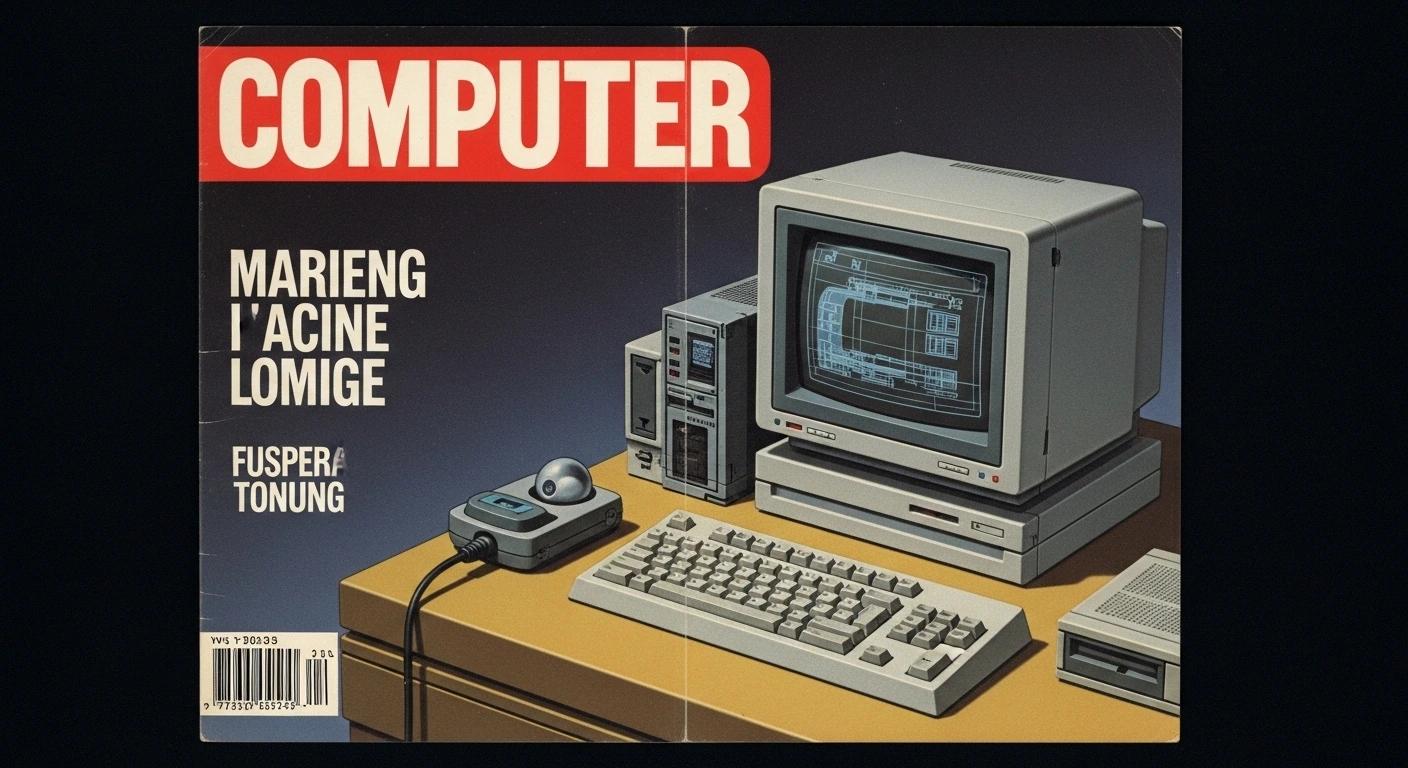
The 1980s introduced what many enthusiasts consider the pinnacle of industrial keyboard design. As personal computers like the IBM PC moved into homes and offices, the keyboard needed to be durable and satisfying to use. This era gave birth to the **IBM Model M**.
The Buckling Spring Mechanism
The Model M utilized a 'buckling spring' mechanism. When a key was pressed, a physical spring would coil and then 'buckle,' providing a sharp tactile snap and a loud, distinctive click. It was heavy, virtually indestructible, and provided a level of feedback that remains the gold standard for many typists in 2026. Many Model Ms from 1985 are still in active use today, a testament to their incredible build quality.
The Standard 101-Key Layout
This period also standardized the layout we recognize. The addition of function keys (F1-F12), the navigation cluster (Home, End, Page Up/Down), and the separate Numpad became the 'Enhanced' layout. While variants exist, the core architecture of the 101/104-key board has changed remarkably little since the mid-1980s.
Section 4: The Membrane Winter and the Rise of Portability (1990s - 2010s)
As the PC market exploded, manufacturers looked for ways to cut costs. The expensive mechanical switches and buckling springs of the 80s were replaced by membrane 'dome' switches. These used a layer of conductive rubber or silicone. They were cheaper to produce, lighter, and spill-resistant, but they lacked the tactile feedback and longevity of their ancestors.
The Laptop Revolution
The rise of the laptop necessitated even thinner keyboards. 'Scissor switches' were developed to provide a tiny amount of travel in a very low profile. While necessary for portability, this trend led to some of the most controversial designs in history, such as the infamous 'Butterfly' switch, which sacrificed reliability for thinness—a mistake that would eventually steer the market back toward mechanical switches.
Section 5: The Mechanical Renaissance and the Custom Scene (2015 - 2026)
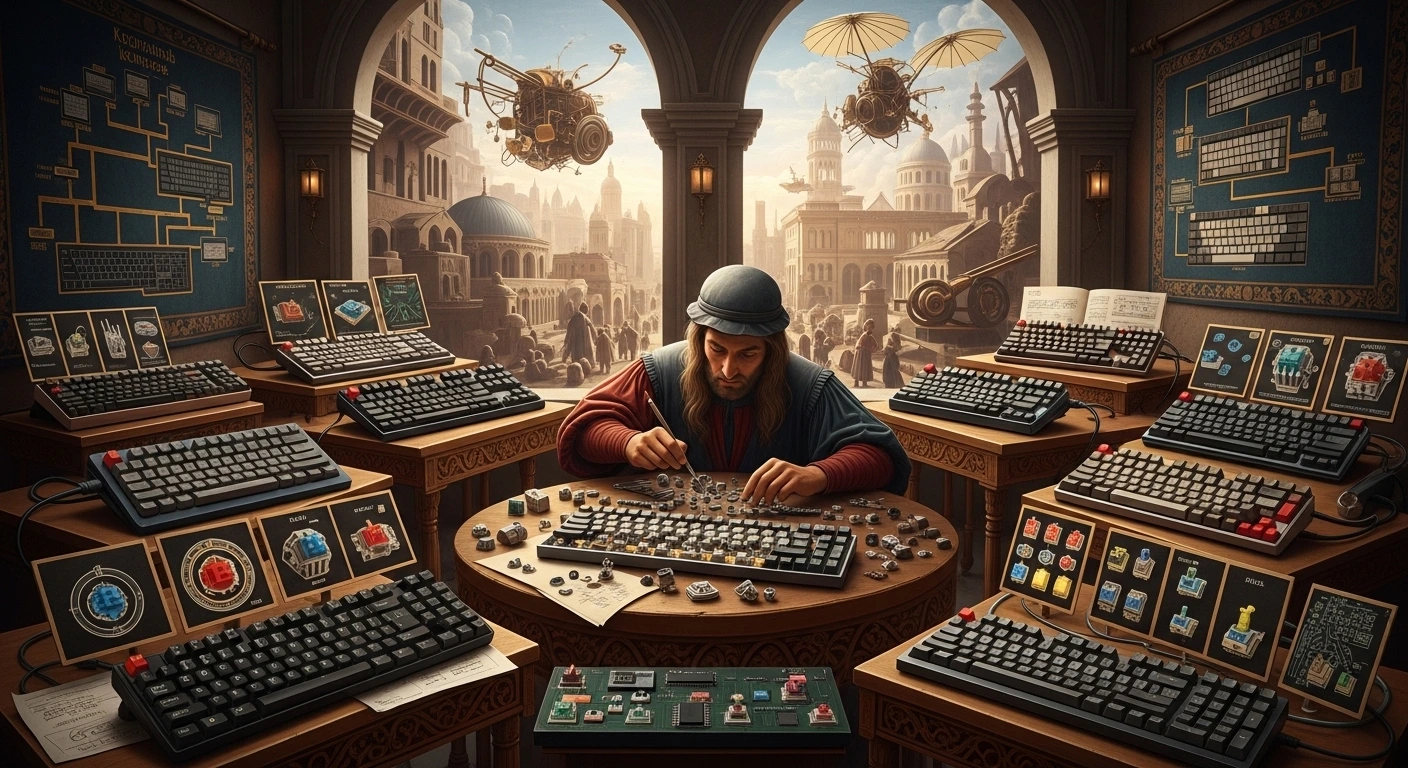
In the last decade, a massive shift has occurred. Enthusiasts, gamers, and professionals, tired of 'mushy' membrane boards, began rediscovering the joy of mechanical switches. This sparked a global cultural phenomenon: the custom keyboard hobby.
The Enthusiast Boom
What started as a niche hobby on forums like Geekhack and Reddit graduated into a multi-billion dollar industry by 2026. Users now build their own keyboards from scratch, choosing the PCB, the case material (from aluminum to poly-carbonate), and even lubricating their own switches for a 'thocky' sound. The keyboard is no longer just a tool; it is a piece of desk art and a highly personal expression of taste.
Modern Innovations: HE and Optical Switches
As we reached 2026, the technology has moved beyond the classic Cherry MX design. Hall Effect (magnetic) switches use magnets to detect the exact position of a key, allowing for 'Rapid Trigger' features and adjustable actuation points that were impossible in the 19th-century mechanical models. We have come full circle: from complex mechanical typebars to digital precision that mimics the physical feel we've always loved.
Section 6: The Evolution of Layouts – From Full-Size to 40%
As users became more focused on desk space and ergonomics, the standard full-size keyboard began to shrink. We saw the rise of Tenkeyless (TKL) designs, which removed the numpad, and even smaller 60% layouts that fit in a backpack. In 2026, the 'split' and 'column-stagger' (ortholinear) layouts are more common than ever, finally challenging the row-staggered layout we inherited from the 1860s typewriters.
Frequently Asked Questions
Q: Why do we still use QWERTY if it was designed for typewriters?
Network effects and muscle memory. Once a standard is learned by millions, the cost of switching (to layouts like Dvorak or Colemak) is too high for most, despite potentially better efficiency.
Q: What was the first computer keyboard?
The 1956 MIT Whirlwind was one of the first systems to integrate a direct keyboard input, moving away from paper tapes and punch cards.
Q: Are buckling springs still made?
Yes! Unicomp continues to manufacture buckling spring keyboards using the original IBM tooling, keeping the 1980s feel alive in the 2020s.
Conclusion: Looking Back to Move Forward
The history of the keyboard is a reminder that technology rarely truly dies—it evolves. We still 'Shift' for capitals. We still use the layout from 1878. We still love the clicky sound of a mechanical action. As we look forward into the rest of the 21st century, the keyboard remains our primary tactile link to the digital world—a 150-year-old tradition that isn't going anywhere.
Ready to test your own piece of history?
Check your keyboard on Keytest.io → Start TestBookmark this guide and share it with your fellow keyboard enthusiasts!